
Things I used to believe: I used to think alignment problems were people problems.
Alignment problems are usually the result of incentives that drive the wrong behaviors. These incentives can be financial or social, but they place a finger on the scale and tip it in their direction.
Carter Cathey
2/9/20262 min read
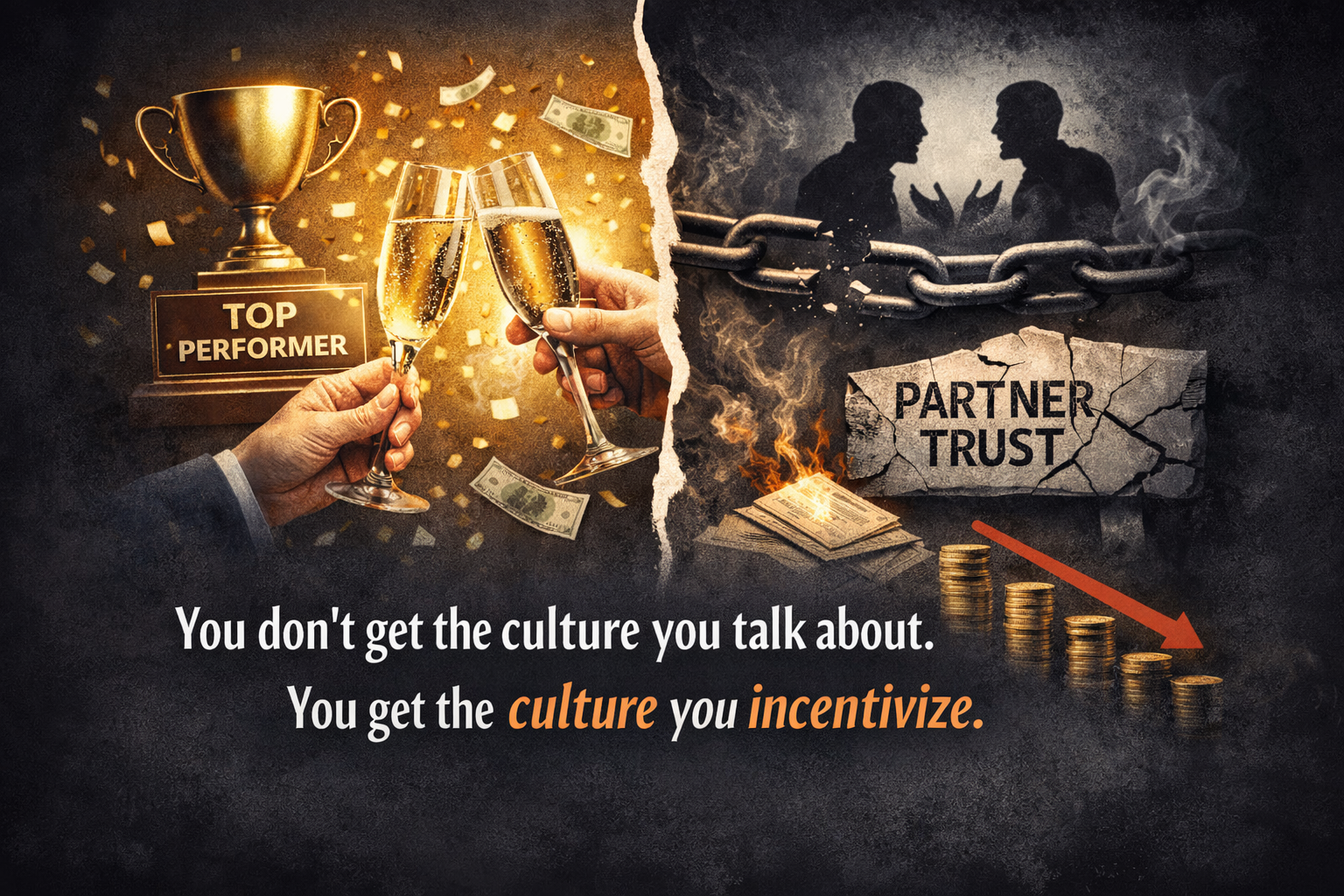
Most alignment problems aren’t about people. They’re about incentives.
I met a mid-career salesperson recently and we ended up swapping career stories. At one point, she mentioned that she had led her company in new-logo sales for two straight years.
President’s Club. Top performer. Big recognition.
Naturally, I asked what she credited her success to.
She was genuinely excited to explain her “system.”
The company sold both directly and through VAR partners. Roughly 70% of revenue flowed through those partners, so the channel was strategically important.
Here’s what she described, very matter-of-factly:
She would search the CRM for proposals other reps had issued to VARs where the project title included the end customer’s name, something like “Victoria’s Secret Project.”
Using that information, she’d bypass the VAR and contact the end customer (Victoria's Secret) directly with a new proposal.
And she made sure her direct quote was 20–30% cheaper than the partner’s.
The result?
She won a lot of these deals directly.
She blew out her number.
She got celebrated.
From her perspective, the system worked exactly as intended.
But stepping back, the behavior that was being rewarded included:
Using internal CRM data in ways it was never intended to be used
Undermining the company’s own partner ecosystem including theft of their confidential work-product
Cannibalizing deals from teammates
Reducing company margin to guarantee personal wins
And yet, none of that showed up on a leaderboard.
Revenue did.
This wasn’t a “bad actor” story.
She didn’t describe it as sneaky or unethical.
She described it as how you win.
That’s what stuck with me.
Because this is the uncomfortable truth:
People optimize for what you reward, not for what you say you value.
If the only visible scorecard is closed revenue, then closed revenue is what you’ll get, regardless of the downstream consequences:
Partner distrust
Margin erosion
Internal resentment
Cultural decay
Revenue covers a lot of sins.
And it made me reflect on something I’ve seen repeatedly:
You don’t get the culture you talk about. You don't get the culture you say is important. You get the culture you incentivize and hold people accountable to.
Which raises a harder question:
How often do we celebrate outcomes that are not actually aligned with the goals, vision, and identity of our business? How often do the wrong people get celebrated?
Related Articles by Carter Cathey
About Carter Cathey
Carter Cathey is a sales and revenue leader with more than 20 years of experience helping market research, technology, and private-equity-backed businesses scale revenue, improve operations, and build predictable growth systems.
Throughout his career, he has led sales transformation initiatives, pricing strategy projects, subscription business model transitions, operational redesign efforts, and commercial growth programs.
He writes about leadership, organizational design, business systems, data-driven decision making, and the challenges companies face as they scale.
Learn more about Carter Cathey