
Sales Commissions & Learned Helplessness
When sales commission plans go wrong, they don't just demotivate, they can actually train sales reps to give up. It is easier for a sales commission plan to demotivate than to motivate if they aren't very carefully designed.
Carter Cathey
9/29/20252 min read
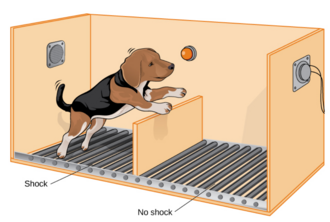
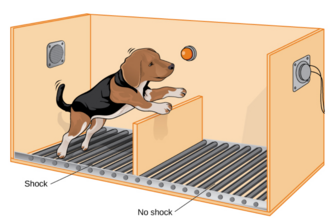
When commission plans go wrong, they don’t just demotivate; they can actually train reps to give up.
Back in the 1970s, researchers at University of Pennsylvania ran a famous experiment with dogs and mild electric shocks.
They divided the dogs into three groups:
1️⃣ Escape Group – Dogs could press a panel or jump a barrier to stop the shock.
2️⃣ No Escape Group – Dogs had no way to stop the shock.
3️⃣ Control Group – No shocks at all.
Later, all the dogs were placed in a new box where they could easily escape the shock.
The results were stunning:
- Escape and Control dogs learned to avoid the shocks quickly.
- No Escape dogs mostly didn’t even try. They just lay down and accepted it.
This is the essence of learned helplessness. When people are repeatedly exposed to uncontrollable outcomes, they stop trying… even when escape or success is later possible.
So what does this have to do with sales commissions?
Sales commissions are supposed to incentivize behavior and drive growth. But if the plan feels uncontrollable or unfair, it can create that same sense of learned helplessness in your team.
Here are a few principles to keep your plan motivating instead of demoralizing:
1. Tighten the effort–reward loop
Reps should clearly see how their individual actions drive outcomes.
👉 Why it works: Reinforces agency, “what I do matters.”
2. Make goals challenging but controllable
Set quotas aligned with territory potential and realistic conversion rates.
👉 Why it works: Motivation thrives when success is achievable through effort.
3. Reward partial progress
Avoid all-or-nothing thresholds (e.g., zero commission below 100% of quota).
👉 Why it works: Prevents reps from giving up once a stretch target seems out of reach.
4. Increase payout predictability
Pay quickly and consistently; reduce clawbacks and randomness.
👉 Why it works: Stable cause-and-effect builds trust.
5. Reduce perceived randomness
If deals fall through for reasons outside rep control, build mechanisms to adjust.
👉 Why it works: Keeps ownership tied to effort, not chance.
6. Communicate plan mechanics clearly and early
A confusing plan is a demotivating plan.
👉 Why it works: Clarity boosts perceived control and buy-in.
Bottom line: Commission plans aren’t just financial instruments; they’re behavioral conditioning systems.
- Designed poorly → they create learned helplessness.
- Designed well → they drive agency, resilience, and sustained performance.
Have you ever worked under a commission plan that made you feel powerless or empowered? I’d love to hear your experience.
About Carter Cathey
Carter Cathey is a sales and revenue leader with more than 20 years of experience helping market research, technology, and private-equity-backed businesses scale revenue, improve operations, and build predictable growth systems.
He writes about leadership, growth, sales operations, organizational design, and business systems.
Related Articles by Carter Cathey
Post
Post
Post
Post
Post
About Carter Cathey
Carter Cathey is a sales and revenue leader with more than 20 years of experience helping market research, technology, and private-equity-backed businesses scale revenue, improve operations, and build predictable growth systems.
Throughout his career, he has led sales transformation initiatives, pricing strategy projects, subscription business model transitions, operational redesign efforts, and commercial growth programs.
He writes about leadership, organizational design, business systems, data-driven decision making, and the challenges companies face as they scale.
Learn more about Carter Cathey