
How Systems Work: The Difference Between a Process and a Ritual
Processes are designed to solve problems and create value, but over time many become rituals that persist without purpose. As organizations grow, decisions, approvals, and workflows often remain in place long after their value has diminished. The result is added friction, slower execution, and systems that consume time without improving outcomes.
Carter Cathey
5/22/20261 min read
Most processes don’t start as rituals.
They start as solutions.
At some point, someone identified a problem, created a process to solve it, and that process added real value. It improved quality, reduced risk, or helped the business move faster.
Then the company grew.
The problem changed.
The context changed.
But the process didn’t.
Over time, people stopped asking why it existed. It became part of how things are done.
That’s the moment a process becomes a ritual.
I’ve seen this show up in very practical ways.
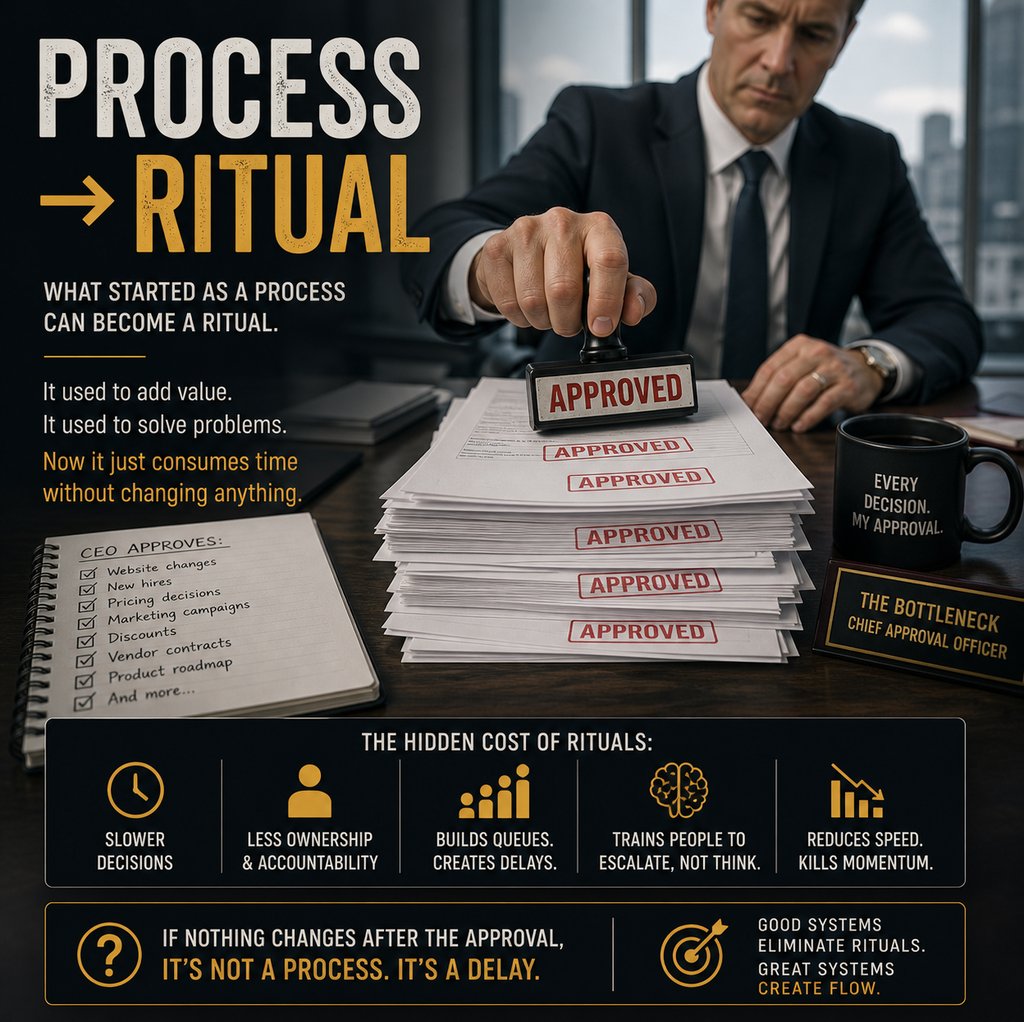
The CEO approves every pricing decision.
The CEO reviews every website change.
The CEO interviews every new hire.
At one point, those decisions mattered. The involvement added value.
But as the organization grows, something subtle changes.
The approvals still happen, but nothing changes because of them.
No feedback.
No challenge.
No different outcome.
The process remains, but the value is gone.
At that point, it’s no longer improving decisions.
It’s delaying them.
This is where systems start to slow down.
Rituals create queues.
They reduce ownership.
They train people to escalate instead of think.
And because they feel “normal,” they rarely get questioned.
Most inefficiency in organizations doesn’t come from a lack of process.
It comes from too many rituals.
Processes should evolve with the business.
If they don’t, they become the friction that holds it back.
If nothing changes after the approval, it’s not a process.
It’s a delay.
Related Articles by Carter Cathey
About Carter Cathey
Carter Cathey is a sales and revenue leader with more than 20 years of experience helping market research, technology, and private-equity-backed businesses scale revenue, improve operations, and build predictable growth systems.
Throughout his career, he has led sales transformation initiatives, pricing strategy projects, subscription business model transitions, operational redesign efforts, and commercial growth programs.
He writes about leadership, organizational design, business systems, data-driven decision making, and the challenges companies face as they scale.
Learn more about Carter Cathey