
Leadership Lessons: Why Good Leaders Design Systems Instead of Solving Problems
Many leaders earn recognition by solving problems personally. While effective in small teams, this approach often creates dependency, limits team development, and eventually constrains organizational growth. The most scalable leaders shift their focus from solving problems themselves to building systems that allow others to solve problems without them.
Carter Cathey
7/22/20264 min read
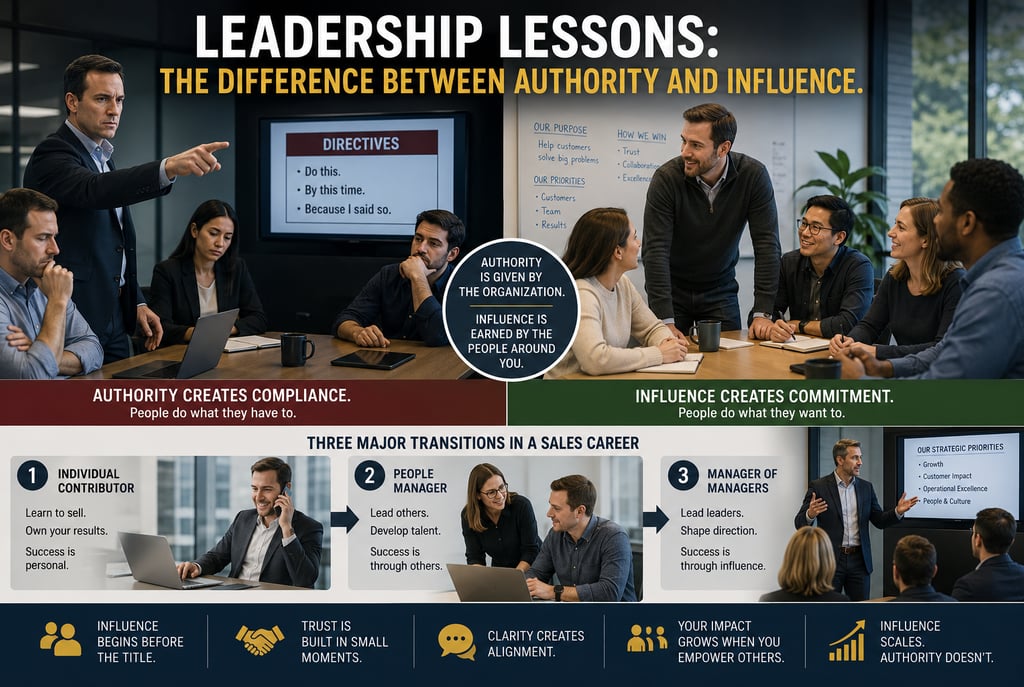
Most organizations celebrate problem solvers. The leader who jumps into difficult situations. The manager who stays late. The sales leader who rescues struggling deals. The executive who can always be counted on to fix whatever is broken.
These people are often viewed as indispensable. They receive praise. They receive promotions. They become organizational heroes.
And for a period of time, they often deserve it. The challenge is that leadership behaviors that work exceptionally well in small teams often become liabilities as organizations grow.
What begins as problem solving eventually becomes dependency.
The Hero Leader
Most hero leaders are well-intentioned.
They care deeply about results.
They work hard.
They want to help their people succeed.
When problems emerge, they instinctively jump in.
A difficult customer issue? They handle it.
A struggling employee? They intervene.
A deal at risk? They take over.
A conflict between departments? They resolve it personally.
The results are often immediate and visible.
Problems get solved.
Customers stay happy.
Revenue gets protected.
The leader gains a reputation for reliability.
Everyone wins.
At least initially.
Every Time You Solve the Problem, You Teach the Wrong Lesson
What many leaders fail to recognize is that every intervention is also a training event. When a manager consistently solves problems personally, the team learns something. Not how to solve the problem. How to escalate the problem.
The lesson becomes: "When something difficult happens, go find the boss."
Over time, employees stop developing their own problem-solving muscles.
Decision-making becomes centralized.
Confidence declines.
Initiative decreases.
The team becomes increasingly dependent on the leader. Ironically, the more helpful the leader becomes, the weaker the organization often gets.
Growth Eventually Exposes the Limitation
This approach can work for surprisingly long periods. A manager can personally support five people. Maybe ten. Sometimes even more. But eventually mathematics wins.
There are only so many hours available. Every organization eventually reaches a point where one person's effort can no longer support the complexity of the business.
This is where many talented leaders stall. Not because they lack capability. Because they have built a system that requires their constant involvement.
Every problem still routes through them.
Every decision still requires them.
Every escalation still depends on them.
The organization grows. Their capacity does not.
The Super-Seller Trap
I've seen this most frequently in sales leadership. A top-performing salesperson becomes a manager. The organization assumes their success will transfer naturally. Instead of developing the team, they continue doing what made them successful.
They jump into deals.
They handle escalations.
They negotiate pricing.
They save opportunities.
They become involved in everything.
Initially the results look impressive.
Revenue remains strong. Customers are happy. Leadership sees a hard-working manager.
What often goes unnoticed is what is happening underneath. The team gradually becomes support staff for the manager. Rather than creating more producers, the manager becomes the primary producer.
The organization becomes increasingly dependent on one person.
The Hidden Cost of Being Indispensable
One of the saddest leadership patterns I have encountered is the leader who desperately wants greater responsibility but cannot seem to advance.
They work sixty-hour weeks.
They sacrifice personal time.
They deliver strong results.
They genuinely care.
Yet they remain stuck. The reason is often hidden inside their success. They have become indispensable to their current role. Their organization cannot imagine them leading a larger function because they are still personally performing too much of the current one.
Their effectiveness is tied to direct effort. The next level requires leverage. The skills that made them successful become the very thing preventing further growth.
The Vacation Test
One of the simplest leadership assessments I've ever seen is what happens when a leader disappears for a week. Many hero leaders secretly enjoy what follows.
Questions pile up.
Decisions stall.
Problems escalate.
Everyone struggles.
The leader returns and hears: "We couldn't wait for you to get back."
It feels validating.
It feels important.
It feels like evidence of value.
I increasingly view it differently. If a team becomes significantly less effective because one leader takes a few days off, the organization may not have a people problem. It may have a leadership design problem.
The goal is not to become indispensable. The goal is to build capability that survives your absence.
System Builders Think Differently
System-building leaders approach problems differently. When they encounter recurring issues, they ask:
Why does this keep happening?
What process is missing?
What training is needed?
What decision framework would help?
How can this be solved permanently?
Their focus is not on solving today's problem. Their focus is on preventing tomorrow's version of the same problem. The solution may take longer. It may be less visible. It may receive less recognition. But it creates leverage.
And leverage is what allows organizations to scale.
The Ultimate Goal of Leadership
Leadership is not measured by how many problems you can personally solve. Leadership is measured by how effectively the organization functions without your direct involvement. The best leaders do not create followers.
They create capability.
They create judgment.
They create systems.
They create future leaders.
The hero leader becomes the bottleneck. The system-building leader becomes the multiplier. And multipliers are the leaders who scale.
Recommended Internal Links
This article naturally connects to:
About Carter Cathey
Carter Cathey is a sales and revenue leader with more than 20 years of experience helping market research, technology, and private-equity-backed businesses scale revenue, improve operations, and build predictable growth systems.
Throughout his career, he has led sales transformation initiatives, pricing strategy projects, subscription business model transitions, operational redesign efforts, and commercial growth programs.
He writes about leadership, organizational design, business systems, data-driven decision making, and the challenges companies face as they scale.
Learn more about Carter Cathey