
How Systems Work: The Moment a Company Stops Learning From Its Own Data
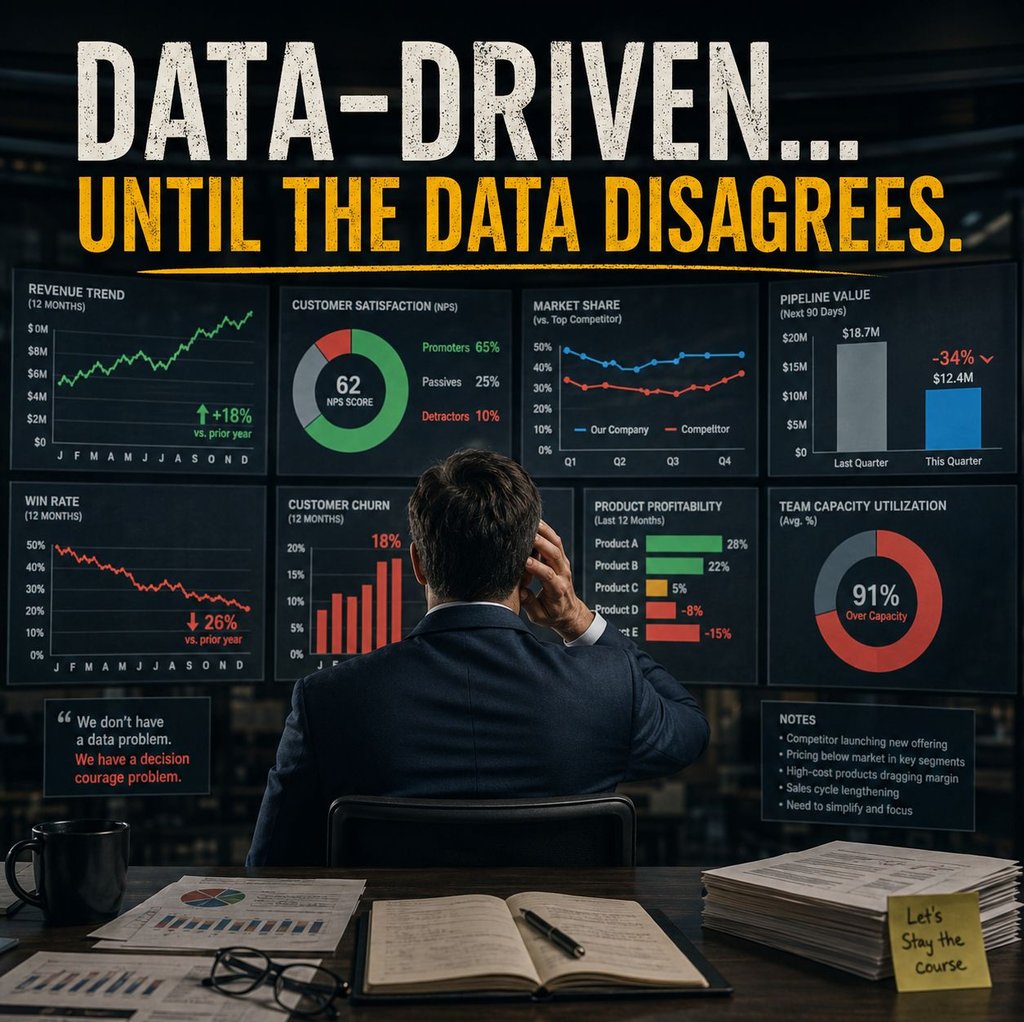
Many organizations claim to be data-driven, but struggle to adapt when data challenges existing beliefs, strategies, or narratives. Companies often continue operating on assumptions despite clear signals around declining performance, operational inefficiency, or changing market dynamics. The real value of data is not in validating existing decisions, but in helping organizations learn, adapt, and change course when necessary.
Carter Cathey
5/29/20262 min read
How Systems Work: The Moment a Company Stops Learning From Its Own Data
One of the things that always surprised me about the survey research industry was how rarely survey companies used research to guide their own decisions.
We spent our days telling clients to become more data-driven, but internally, many organizations still relied heavily on instinct, narrative, politics, or historical belief.
And honestly, I don’t think this problem is unique to the research industry.
Most organizations don’t struggle because they lack data.
They struggle because the data eventually challenges something they already believe to be true.
That’s the moment organizations stop learning.
You see it everywhere.
Sales start slowing, but leadership refuses to acknowledge that a competitor is gaining traction or that pricing has drifted away from the market.
Operational inefficiencies become obvious, but nobody wants to admit certain products or services are consuming far more time and effort than their pricing justifies.
Teams spend enormous amounts of time on low-value activities, but because nobody measures where time is actually going, the inefficiency remains invisible.
The data exists.
The organization just doesn’t want to fully accept what it implies.
I’ve also seen this from the client side many times over the years.
Dozens of companies approached us wanting to conduct market research projects, but their goal was not really to understand something new.
Their goal was to support a decision they had already made.
That’s an important distinction.
Healthy organizations use data to challenge assumptions, reduce uncertainty, and improve decisions.
Fragile organizations use data to validate narratives they are already emotionally or politically committed to.
And this is where organizations quietly lose adaptability.
Because the moment data becomes a tool for confirmation instead of discovery, the organization stops learning.
Most companies say they want data-driven decisions.
What they often mean is:
“We want data that supports the direction we already chose.”
The problem is that reality eventually catches up.
Markets change.
Competitors improve.
Customer expectations evolve.
Operational inefficiencies compound.
And organizations that stop learning from their own data eventually stop adapting to their environment.
Data only creates value if the organization is willing to change because of what the data reveals.
The most dangerous moment for a company isn’t when the data turns negative.
It’s when the organization stops being willing to learn from what the data is trying to tell them.
Related Articles by Carter Cathey
About Carter Cathey
Carter Cathey is a sales and revenue leader with more than 20 years of experience helping market research, technology, and private-equity-backed businesses scale revenue, improve operations, and build predictable growth systems.
Throughout his career, he has led sales transformation initiatives, pricing strategy projects, subscription business model transitions, operational redesign efforts, and commercial growth programs.
He writes about leadership, organizational design, business systems, data-driven decision making, and the challenges companies face as they scale.
Learn more about Carter Cathey