
Data, Reporting, and Visibility: The Danger of Lagging Indicators
Lagging indicators are valuable for evaluating outcomes, but they offer limited ability to influence future performance. Organizations become far more effective when they identify leading indicators that reliably predict and shape the results they care about. The real power of measurement is not simply understanding what happened—it is improving what happens next.
Carter Cathey
6/22/20262 min read
One of the most common measurement mistakes I’ve seen inside organizations is an overreliance on lagging indicators.
And to be clear, lagging indicators absolutely matter.
Revenue matters.
Retention matters.
Margin matters.
Churn matters.
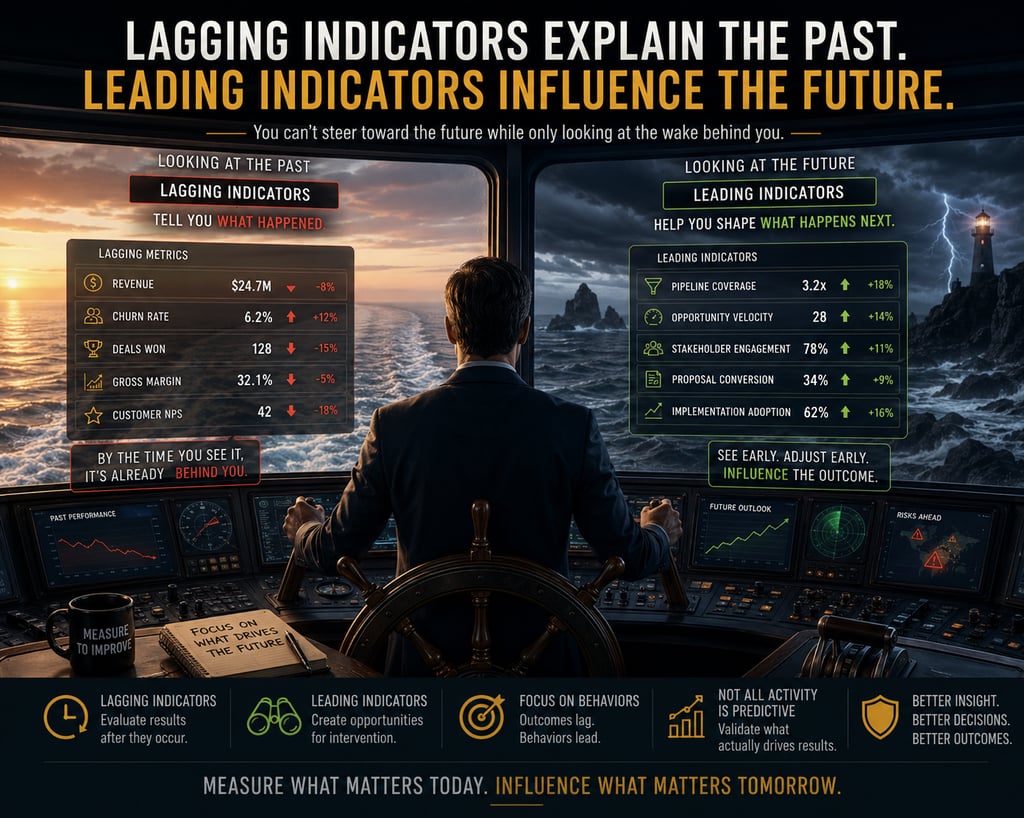
But the challenge is that lagging indicators primarily tell you what has already happened.
That limits their operational usefulness.
Especially inside sales organizations.
In many ways, revenue is already the ultimate lagging indicator.
So when companies build reporting structures centered entirely around lagging metrics that sit even further downstream from revenue, it becomes very difficult to use those metrics to meaningfully influence future behavior.
The real purpose of measurement is not simply understanding the past.
It’s improving the future.
That’s why leading indicators matter.
Leading indicators create the opportunity for intervention before outcomes fully materialize.
They help organizations:
identify momentum shifts earlier
recognize operational friction faster
adjust behavior proactively
influence future outcomes instead of simply documenting them afterward
The key, however, is that not every activity metric is actually a meaningful leading indicator.
That’s an important distinction.
Organizations sometimes mistake:
activity
volume
busyness
dashboard movement
…for predictive operational signals.
But a leading indicator only matters if it reliably correlates to the outcome you actually care about.
That’s the real challenge.
For example, in sales organizations, metrics like:
pipeline quality
opportunity aging
stakeholder engagement
conversion behavior
implementation adoption
proposal velocity
…may provide far more operational insight into future revenue than revenue reporting itself.
Because they create the opportunity to intervene earlier.
And that’s the operational advantage of leading indicators.
Lagging indicators often reveal problems long after organizations still had the ability to prevent them.
By the time:
revenue declines
churn increases
customer satisfaction falls
deal conversion collapses
…the underlying operational causes may have already existed for months.
That’s why mature operators spend less time simply admiring outcomes and more time understanding the behaviors that create them.
Revenue tells you what happened.
Leading indicators help shape what happens next.
And ultimately, the value of measurement is not hindsight.
It’s intervention.
Related Articles by Carter Cathey
About Carter Cathey
Carter Cathey is a sales and revenue leader with more than 20 years of experience helping market research, technology, and private-equity-backed businesses scale revenue, improve operations, and build predictable growth systems.
Throughout his career, he has led sales transformation initiatives, pricing strategy projects, subscription business model transitions, operational redesign efforts, and commercial growth programs.
He writes about leadership, organizational design, business systems, data-driven decision making, and the challenges companies face as they scale.
Learn more about Carter Cathey